
Heel Basics with Dr. Pedram A. Hendizadeh
At Scarlett Chase, we believe that intelligent design begins with understanding the biomechanics of the foot—and few experts understand this better than leading podiatric surgeon Dr. Pedram A. Hendizadeh, DPM, FACFAS, Founder of Advanced Footcare. With decades of clinical experience treating complex foot conditions and advising patients on footwear, Dr. Hendizadeh brings a rare combination of medical insight and practical, real-world perspective on what makes heels comfortable, supportive, and wearable.
We sat down with Dr. Hendizadeh to discuss what truly matters in high-heel design, what features women should look for, and how thoughtful engineering can dramatically change the experience of wearing heels. His guidance offers a clear view into why the footwear industry is evolving—and how Scarlett Chase aligns with the most advanced principles of comfort and support.
What is your name and title?
Dr. Pedram A. Hendizadeh, DPM, FACFAS, Founder of Advanced Footcare
What type of heels hurt less?
There are a series of core components that improve the support and comfort of a heeled shoe. These features include structured arch support, a robust heel and high-quality construction and materials designed to withstand the pressure of full body weight on a limited surface.
What features to look for in heels?
Here are three of the most notable attributes to look for in a heeled shoe, whether the heel is a kitten heel or sky high.
First, wearers should look for a stable heel and forefoot base on which they feel supported. Ideally, the heel base is wide enough to support the wearer while walking in a natural heel to toe motion. Often, due to a typical high heel construction, wearers are walking on the ball of their foot to maintain stability due to a lack of support which can exacerbate discomfort. In the best of cases, the outsole will provide some traction control and lift away from the hard ground as well through thoughtful outsole construction.
Second, high heel shoes that offer true arch support are difficult to find but provide a critical benefit in supporting the foot and spreading body weight across the foot surface, rather than centering all body weight on the ball of the foot, particularly where arch support is integrated with an eye towards allowing the heel to sit back into the shoe, rather than lifting it up towards or above the arch.
Third, a high heel shoe that offers supportive and non-compression forming padding under the ball of the foot, whether through its insole, or its outsole, or both, will provide the least pressure on common stress points when standing and walking in a high heel.
A great example of these features coming together into a supportive heeled shoe is the Scarlett Chase footwear line.
How to make heels more comfortable?
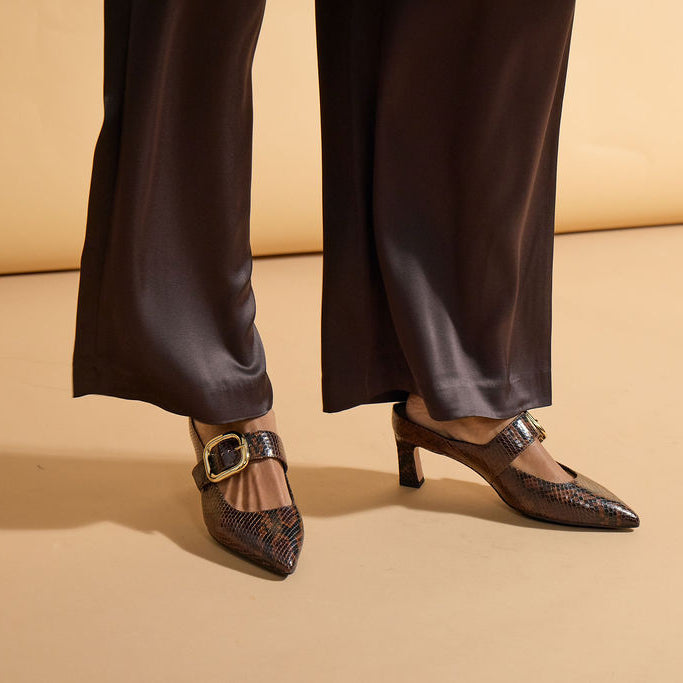
Wearers will benefit from ensuring that the heel height is at a level that they are comfortable with, and that the heel itself provides sufficient width to support the wearer while walking and in motion. The integration of non-compression forming materials into the insole can provide added foot comfort and support. A heeled shoe with straps that assist in holding the foot back, such as a mary jane strap or ankle strap, can provide added comfort. Some high heeled shoes, like Scarlett Chase, offer an orthotic grade, arch supporting insole as a standard feature that provides notable support properties; this also provides sufficient space in the construction of the shoe to permit a custom orthotic to potentially be swapped in providing maximum flexibility and ideally comfort. A rubberized outsole or some other type of traction control sole that seeks to provide more stability in wet or uneven conditions is valuable. Also, while it may seem counterintuitive, it is not best to see added padding placed solely below the heel, as the natural heel pad is robust enough and this added padding tends to negatively impact the pitch of the wearer’s foot in the shoe, forcing the wearer farther forward rather than sitting back into the shoe.
How should heels fit?
When it comes to high heels, often wearers will perceive that a shoe is too small when it is too big. A shoe that is too big will result in the wearer slipping forward, further compressing the ball of foot and toes into the front of the shoe and causing heel slip. By ensuring the correct size and fit, the wearer can utilize the full support structure offered by the shoe. Therefore, a heeled shoe, particularly when it is purchased, should fit snug to the wearers foot, providing comfortable movement without the heel slipping out.
Dr. Hendizadeh’s insights affirm what we’ve long believed: when heels are built with proper support, thoughtful materials, and intelligent engineering, they don’t just look beautiful—they feel beautiful. From sculpted arch support and pitch-changing outsoles to non-compression padding and stable heel bases, the science behind comfort is clear.